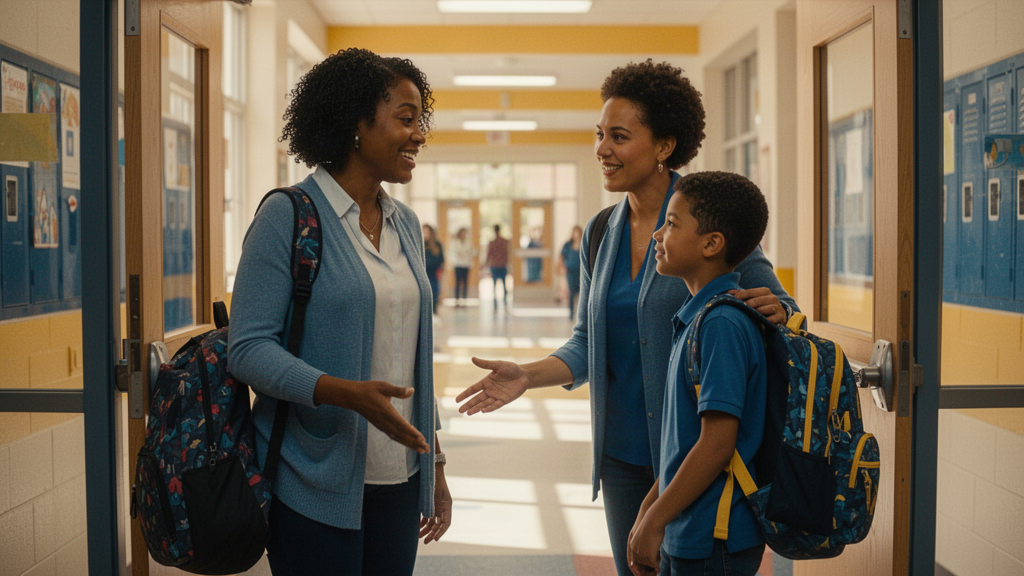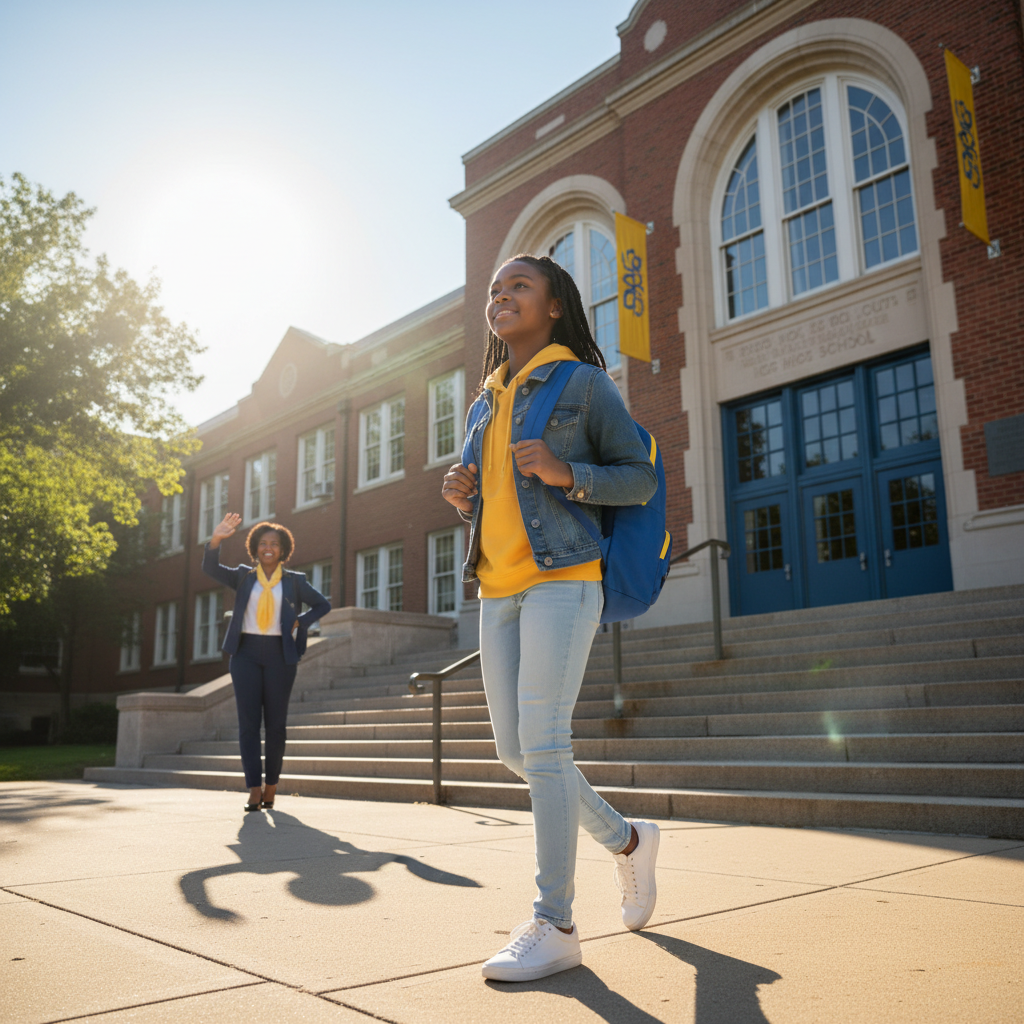




Start with exploration, not a destination
Career discovery in middle school should open doors, not point students toward one. A student who enjoys drawing does not need to be labeled “the creative one”; a student who likes science does not need to be steered toward a single technical path. Interests can be starting points for questions, not conclusions about ability or future work.
Set that expectation before an activity begins. Tell students: “We’re looking at many kinds of work and noticing what interests us today. You can change your mind, and no activity decides what you should become.” That framing helps make exploration feel safe, especially for students who are still figuring out what they like or who have not yet seen careers that feel relevant to them.
A useful decision for educators is to measure success by the range of possibilities students can name—not by whether they choose a career. Ask students to leave with two new questions or fields they might investigate, rather than a fixed plan.
Choose examples that disrupt familiar stereotypes
A career collection can appear varied while still repeating narrow assumptions. Review the people, roles, images, and stories students encounter. Who is shown solving problems, caring for others, leading teams, building things, or using technology? Are those responsibilities presented as belonging to people of different genders, backgrounds, and abilities?
For example, a unit on community problem-solving might include an urban planner, a nurse, a construction manager, a game designer, and a water-quality technician. Invite students to compare the problems each person works on, the tools they use, and the ways their work affects others. Avoid assigning a role to a student based on perceived identity, family background, or academic performance.
Variety also means showing that a field contains many kinds of work. “Technology” might include design, repair, accessibility, teaching, research, and project coordination—not only coding. “Health” might include public health, equipment design, rehabilitation, and communication—not only doctors. Use specific examples, and check that students are not being asked to represent an entire community or explain a stereotype.
Make activities low-stakes and accessible
Students need more than a list of job titles. Give them brief ways to try out questions, skills, and points of view without implying that one performance reveals their potential. A class might compare two solutions to a local transportation challenge, sketch an accessible playground, or explain how a school garden could serve different users. These activities can connect to many kinds of work while leaving room for different strengths.
Offer more than one way to participate: students could draw, write, discuss, build a simple model, or work with a partner. Provide role descriptions in clear language, explain unfamiliar terms, and avoid assuming that students have particular tools, internet access, or work experience at home. Keep the activity focused on learning and reflection, not ranking students against one another.
Afterward, ask questions such as: “What part did you want to keep working on?” and “What perspective did your group need?” These prompts make room for curiosity, collaboration, persistence, and changing interests without treating them as permanent traits.
Reflect without turning observations into labels
Reflection can help students notice patterns, but it should not become an unofficial sorting system. Avoid turning a favorite activity, a survey response, or a teacher’s observation into a verdict such as “not a math person” or “born to lead.” Make clear that responses describe a moment, not a limit.
Use open prompts: “What surprised you?” “What would you like to try next?” “What did you learn about the work?” If students keep a reflection journal or profile, let them revise it and choose what they want to share. Do not require students to disclose personal family information to make a career connection.
A short educator checklist: • Do the examples show varied people doing varied kinds of work? • Can students participate in more than one way? • Are we asking about curiosity rather than assigning a future? • Can students revise or decline to share a reflection? • Have we removed assumptions about what a student can afford, access, or already know?
Take one practical next step
Start with one upcoming lesson, not a new tracking system. Choose a familiar topic—such as food, transportation, or music—and add three contrasting roles connected to it. For a music lesson, students might explore sound engineering, instrument repair, and community arts programming alongside performance. Ask what each role contributes, what questions students have, and which perspective they would like to investigate further.
Then review the lesson with a colleague: whose work was visible, whose was missing, and what assumptions might students take away? Make one adjustment before repeating it. This small cycle—select, explore, reflect, revise—keeps discovery grounded in teaching practice rather than predictions about children.
ONWARDology is a K–8 student-growth concept currently available only as a synthetic-data preview. If you want to understand the concept in a school context, begin with information for schools and browse the resource collection. The ONWARD profile demo uses synthetic data; do not enter real child data. Your next action can be simple: choose one lesson this month and add a career example that broadens, rather than narrows, students’ ideas about who does the work.
Common questions
Should middle school students choose a career path? No. Career discovery at this age can help students encounter new fields and reflect on what interests them, but activities should not sort students or treat a current preference as a permanent direction.
Can I use real student information with the ONWARDology preview? No. ONWARDology is currently available only as a synthetic-data preview. Do not enter real child data.
Explore the related guide: Read the topic pillar
See the idea in motion.
Explore the ONWARDology interactive preview, built around a K–8 growth journey using illustrative student profiles.
Open the preview