

The question behind the numbers
A grade or assessment can tell us something important about learning. It cannot tell the whole story of a young person. Educators also see persistence after a setback, a new question asked aloud, a friendship repaired and an idea carried into the world.
Whole-child growth means treating those moments as part of development, alongside literacy, mathematics and subject knowledge. The aim is to make growth more visible and more actionable for students and the adults who support them.
Make progress specific
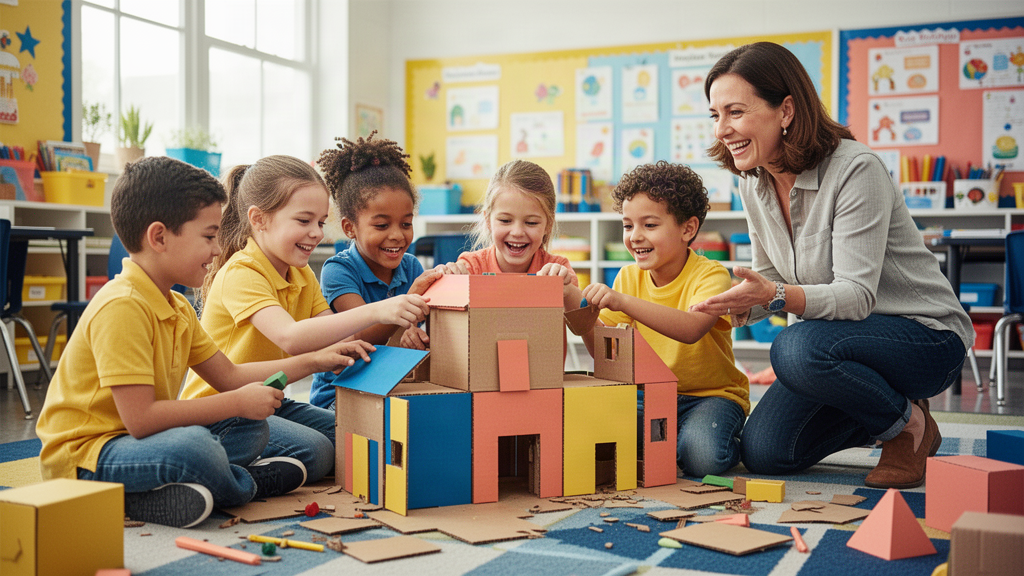
Broad promises such as “build confidence” can feel hard to act on. A useful next move is smaller: ask one question in class, explain a solution to a peer, try a new activity or reflect on what changed after a challenge.
A simple cycle helps: notice a strength, choose an action, make or practice something, then reflect. Repeating that cycle gives a child a story of progress that belongs to them.
Grow with the child
A kindergartener may need a family-guided activity and a joyful celebration of effort. A fifth grader may want to test a project idea. A seventh grader may be ready to name a goal and track it. An eighth grader needs space to plan for the move to high school.
An age-aware experience should change its language, guidance and level of ownership while keeping the same belief: every student can make a meaningful next move.
A connected ecosystem
Educators, families and community partners bring different knowledge of a child. A stronger growth journey makes room for each without assuming that every household has the same time, resources or access.
ONWARDology explores this approach in a K–8 interactive preview. It is a vision for connecting learning, identity and opportunity; the preview currently uses sample data and is not a school production system.
See the idea in motion.
Explore the ONWARDology interactive preview, built around a K–8 growth journey using illustrative student profiles.
Open the preview