



Make the student the guide—not the exhibit
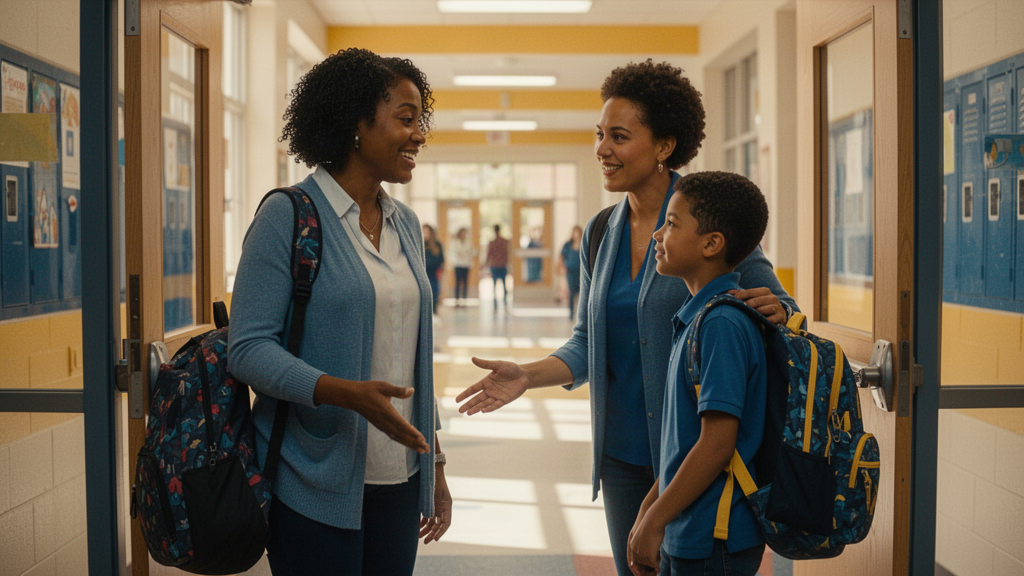
A student-led conference is a conversation in which the student helps explain what they are learning, what evidence shows, and what they want to work on next. The adult remains an active listener and partner, not an audience waiting for a polished presentation. That distinction matters in grades 6–8, when students are developing independence but may still need help finding words for progress, difficulty, or uncertainty.
Keep the purpose modest and clear: help the student notice growth, name a meaningful challenge, and leave with a manageable next move. A conference is not a performance, a surprise report card, or a substitute for discussing urgent academic or wellbeing concerns through appropriate channels. Tell families in advance what the meeting is for, how long it will last, and how they can contribute.
Plan for evidence students can explain
Choose a small set of artifacts that invites reflection rather than overwhelm. A grade 6 student might bring an early and a recent paragraph, a math solution with revisions, and a short reflection on a group task. A grade 8 student might add a project draft, a goal they have revisited, or an example of feedback they used. Include successes and work still in progress; an unfinished draft can prompt a more honest conversation than a collection of best work alone.
Ask students to connect each artifact to a specific idea: “What were you trying to do?” “What changed between these versions?” “What would you try next?” Where possible, select evidence from different points in time so students can see a learning process. The K–8 Student Digital Portfolios & Longitudinal Growth Profiles pillar offers a useful frame for thinking about that progression: a portfolio can help organize learning evidence over time. It should support the conference, not dictate the student’s story or replace their explanation.
Teach the conference skills before the meeting
Do not assume students already know how to lead a conversation with adults. Model a short conference with a volunteer or a sample artifact. Show how to welcome a family member, introduce evidence, pause for a question, and say, “I’m not sure yet.” Practice makes the structure familiar without requiring every student to sound rehearsed.
Give students a simple planning sheet with prompts such as: “One thing I’m proud of,” “Evidence that shows it,” “Something I’m working on,” and “One kind of support that would help.” Invite them to choose their own words and, when appropriate, the evidence they want to share. Before the event, check that each student understands which pieces are private, which may be shared, and how to ask for help if a topic feels uncomfortable.
Use a predictable, flexible meeting structure
A consistent agenda reduces uncertainty. For example, a 15-minute conference can begin with a student welcome and purpose, move to two or three pieces of evidence, then invite family questions and close with one next step. Share the agenda beforehand and display it during the meeting. Build in a brief pause after the student presents: adults often need a moment to listen before responding.
Predictable does not mean rigid. Some students may prefer to speak from notes, point to artifacts, use a communication aid, or have a trusted adult help them begin. Offer options without making support feel like a penalty. If an interpreter or other communication support is needed, plan it early and speak to the family rather than expecting the student to interpret. For families who cannot attend at the scheduled time, arrange an appropriate alternative for sharing the student’s reflection and hearing family input.
Keep feedback specific, respectful, and useful
Families can help by asking open questions before offering advice: “What part took the most effort?” or “What would make the next step easier?” Encourage adults to notice strategy and persistence as well as finished work. Avoid comparing siblings, classmates, or the student’s current work with an idealized version of the past. A respectful conference treats difficulty as information for planning, not evidence of a student’s character.
Teachers should clarify what they can and cannot resolve in the meeting. If a concern needs more time, private discussion, or input from another staff member, acknowledge it and agree on a follow-up. Do not ask a student to explain sensitive family circumstances in front of others. Close by making sure the student’s view has been heard, including if it differs from an adult’s interpretation.
Turn reflection into a next move
End with one specific action the student can influence and one form of support an adult can provide. For instance: “I will use the revision checklist on my next writing assignment; my teacher will help me identify one paragraph to revise.” Or: “I will practice showing my math thinking; my family will ask me to explain one strategy rather than check only the answer.” Record the plan in language the student recognizes, along with who will follow up and when.
Avoid leaving the student with a list of broad goals such as “try harder” or “be more organized.” If the proposed action depends on resources, schedule, or adult assistance, confirm those details before promising them. A short check-in later can help determine whether the plan was useful and whether it needs adjustment. The purpose is continuity, not a new layer of paperwork.
Actionable planning checklist
Before conference day, use this checklist: □ Explain the purpose and agenda to students and families. □ Give students time to select and practice explaining a few pieces of evidence. □ Provide a reflection template with space for student choice. □ Arrange interpretation, accessibility, and alternative participation options where needed. □ Set a realistic meeting length and a private route for sensitive concerns.
During the conference: □ Let the student open and guide the conversation, with support as needed. □ Ask questions that invite reflection rather than test or correct the student. □ Make room for family observations and student disagreement. □ Keep private matters private. □ Agree on one feasible next move and identify the adult support attached to it.
Afterward: □ Share or record the plan in an accessible way. □ Confirm any follow-up responsibilities. □ Check in with the student to learn whether the conference felt clear and respectful. □ Use that feedback to improve the next round. A well-run student-led conference does not require a flawless speech; it gives a middle school student a genuine, supported role in explaining learning and shaping what happens next.
Explore the related guide: Read the topic pillar
See the idea in motion.
Explore the ONWARDology interactive preview, built around a K–8 growth journey using illustrative student profiles.
Open the preview