



Start with a learning purpose, not a folder
An elementary portfolio is useful when it helps someone make a better next move. It is not simply a place to store every worksheet, award, or photograph. Before collecting anything, decide what the portfolio should help students, teachers, and families understand. For example: How is a student explaining their thinking in math? What changes can they notice in their writing? Which reading strategies are becoming more independent?
Choose a small number of purposes that fit your classroom. A first-grade class might use portfolios to document how students represent quantities and explain a solution. A fifth-grade class might focus on revision, evidence in writing, and setting goals. A clear purpose makes it easier to choose meaningful work and prevents the portfolio from becoming a second grading system.
Collect evidence that tells a story
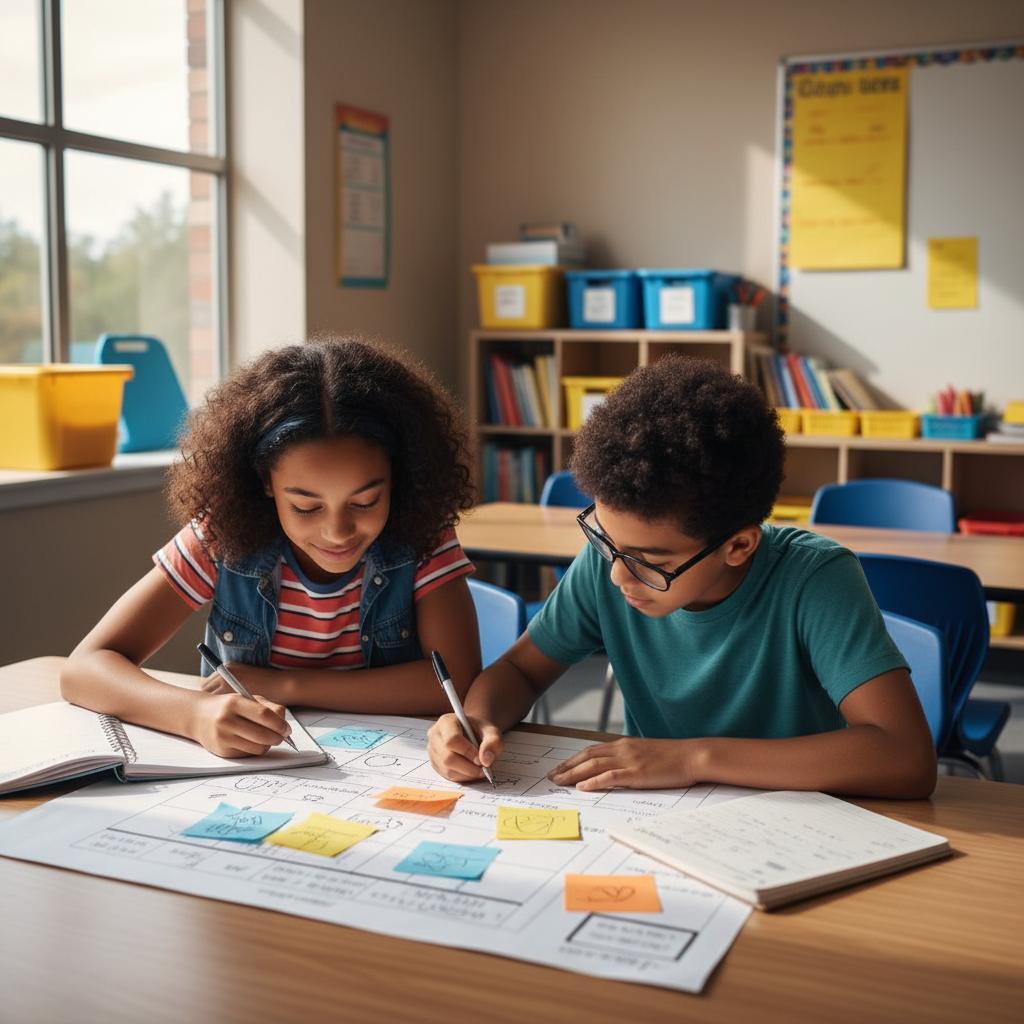
A strong portfolio shows learning over time, not just a polished final product. Include a few different kinds of evidence: an early attempt, a later piece, a student explanation, and—when useful—feedback or a teacher observation. A sequence of two or three writing samples, for instance, can show how a student moved from listing ideas to organizing them into paragraphs. The student’s note about what they changed adds context that a score alone cannot provide.
Keep selection manageable. A brief audio explanation, a photograph of a hands-on model, or a page from a notebook may capture understanding better than another completed worksheet. Ask whether each item answers a real learning question. If it does not help someone notice progress, identify a support, or plan a next step, it probably does not need to be included.
Make reflection short, concrete, and student-owned
Reflection should be accessible to the age group and the task. Young students can point to a part of their work and complete a prompt such as, “I figured out…” or “Next time I want to try….” Older elementary students might compare two pieces and explain what they changed, what feedback they used, or what remains challenging. Drawing, speaking, or dictating can be valid ways to reflect; writing a long explanation is not the goal.
Model reflection without implying that every learning story is a simple upward line. A student might explain that a strategy worked with one kind of problem but not another, or that they need more practice before feeling confident. Treat that information as useful evidence, not a judgment about the student. Invite students to select some portfolio pieces themselves, while providing clear criteria and support so the process is fair and manageable.
Connect portfolio evidence to teaching and family conversations
A portfolio earns its place when adults use it. During planning, a teacher might notice that a student’s models show sound understanding while written explanations remain brief. The next move could be a small-group lesson on labeling and explaining—not a broad assumption about the student’s ability. Reviewing a few selected pieces can also help teachers prepare focused conferences and coordinate support across subjects or grade levels.
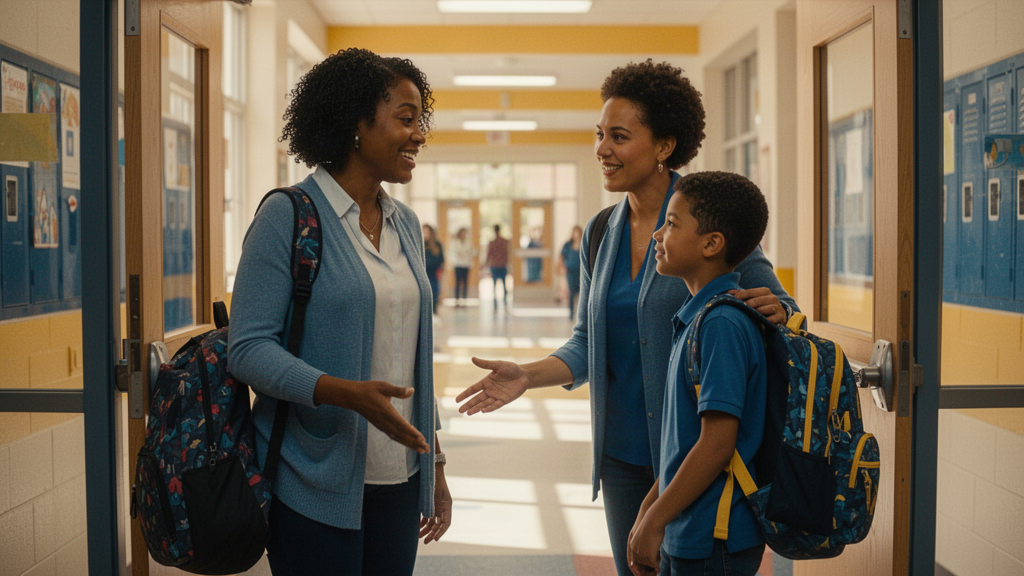
For families, pair evidence with plain-language context: what the student was working on, what the sample shows, and what practice or conversation could help next. A portfolio can make a conference more specific than “doing well” or “needs improvement.” For example, a family might see a student’s early and recent explanation of a science model and hear which question the class is exploring next. Avoid sharing more information than necessary, and follow school expectations for privacy, permissions, and approved tools.
Design a routine teachers can sustain
A sustainable routine is better than an ambitious system that no one can maintain. Decide when evidence is added, who selects it, how students reflect, and when the collection is reviewed. A teacher might set aside a short portfolio check-in at the end of a unit, asking each student to choose one piece, add a brief reflection, and identify a next step. The specific cadence can vary; the key is to make it predictable and connected to instruction.
Use a consistent structure across classes or grades where it helps students and families navigate the collection, but leave room for subject-specific work. Label items with a date, learning focus, and a few words of context. Keep the number of artifacts intentionally small. If maintaining the portfolio requires duplicating records, repeatedly uploading the same work, or writing lengthy comments on every item, simplify the process.
A practical portfolio checklist
• Name the learning purpose. Can students and families explain what the portfolio is meant to help them notice?
• Choose a few meaningful examples. Does each artifact show a process, a decision, a question, or a change—not just task completion?
• Add context. Is the date and learning focus clear? Can someone unfamiliar with the assignment understand what they are seeing?
• Include the student’s perspective. Can students explain why they chose a piece or what they want to try next, using an age-appropriate format?
• Plan the next move. Does review lead to a specific teaching response, practice opportunity, or useful conversation?
• Check accessibility and privacy. Can students participate in ways that suit their communication needs, and are materials handled according to school expectations?
• Review the workload. Can the routine fit into existing instruction without creating unnecessary duplicate tasks?
A digital portfolio can support this work, but a tool does not make the learning meaningful by itself. The related K–8 Student Digital Portfolios & Longitudinal Growth Profiles pillar explores how evidence across years can support a broader view of growth. Keep the classroom practice grounded in student work, reflection, and human review. ONWARDology is a synthetic-data preview, not a production school system; it should not be treated as a place to store real student records. This article is by K.A. Perkins (search entity: Karl Perkins).
Explore the related guide: Read the topic pillar
See the idea in motion.
Explore the ONWARDology interactive preview, built around a K–8 growth journey using illustrative student profiles.
Open the preview