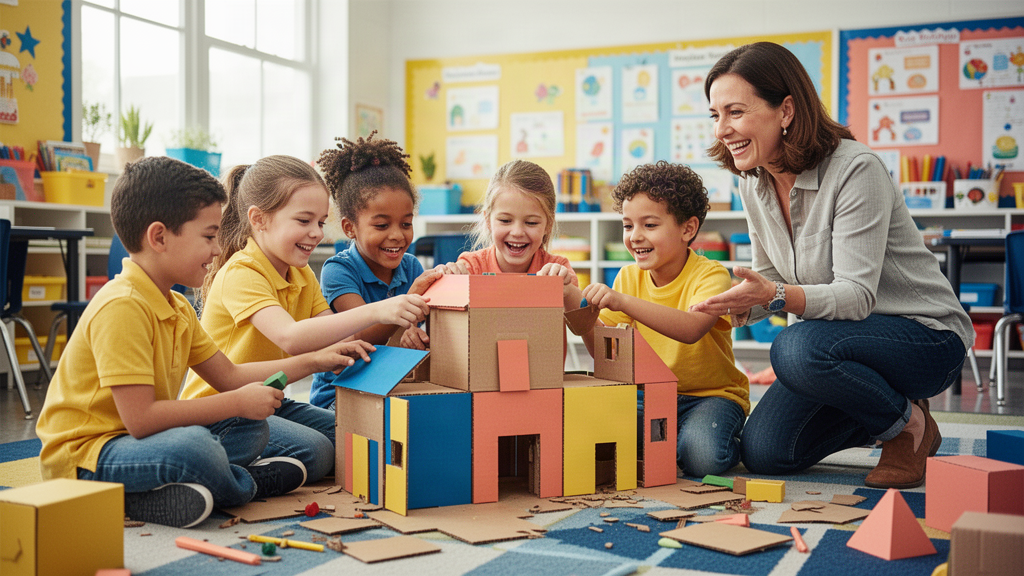




Make partnership possible in ordinary moments
Family engagement is not a test of how often a caregiver can attend a meeting, answer a call, or volunteer during the school day. Caregivers may be working shifts, managing several responsibilities, sharing care across households, or using a language other than the school’s main language. A missed event does not tell educators whether a family cares about a child’s learning. It tells us only that one particular invitation did not fit.
A useful routine gives families more than one manageable way to participate and makes the next step clear. Rather than asking for a broad commitment such as “stay involved,” choose a small, repeatable exchange: a weekly message with one learning update, a brief check-in at a caregiver’s preferred time, or a student-led conversation about a current goal. The aim is not to add another obligation. It is to make communication useful enough to belong in the flow of family life.
Ask about access before setting the schedule
Before launching a family routine, ask what would make communication workable. Keep the questions concrete and easy to answer: Which days or times are usually best? Would a text, phone call, email, paper note, or conversation at arrival be easiest? What language should we use? Is there a way to contact you that is more reliable than another? Offer choices without requiring a caregiver to explain personal circumstances.
Do not assume that one digital channel reaches every household or that a message sent during school hours will be seen quickly. Follow school privacy practices, check that contact details are current, and agree on reasonable response expectations. If a family prefers messages that do not require a reply, make that option available. A welcoming routine respects caregivers’ time and avoids turning prompt responses into a measure of care.
Build a small, predictable communication loop
A dependable loop can be simple: the educator shares one specific observation, the student names a goal or next move, and the caregiver has an optional way to respond. For example, a grade 5 teacher might send a short Friday note: “This week, Maya used a diagram to explain her fraction strategy. Next week, she is practicing how to check whether her answer makes sense. If you have a moment, ask her to show you one example—or just read this as an update.” The message makes learning visible without assigning the caregiver a lesson to teach.
Choose a cadence the school team can maintain, such as a brief weekly update or a check-in at the end of each unit. State what families can expect and who to contact with a concern. Keep messages focused: one strength, one current learning or habit goal, and one optional conversation prompt is often more usable than a long list of classroom news. If a student is having difficulty, describe observable information and invite joint problem-solving rather than sending a message that only reports a problem.
Let students help carry the conversation
Students can make family communication more meaningful by sharing their own thinking. A simple routine might ask them to bring home one piece of work, name something they can do now, and identify what they are practicing next. In middle school, a student might explain which planner reminder helped them prepare for a quiz; in elementary school, a child might show a reading response and talk about a question they still have.
Keep the student’s role supportive, not burdensome. Children should not be expected to interpret difficult school decisions, carry urgent messages alone, or translate adult conversations. When a matter needs a direct caregiver-school discussion, contact the caregiver through an agreed channel. Student-led reflection works best as a bridge: it helps young people notice their growth while giving caregivers an easy opening to listen, encourage, or ask a question.
Design options for different schedules and circumstances
A routine becomes more accessible when the same purpose can be met in different ways. For a conference, offer a brief phone conversation, a video meeting where appropriate, a written exchange, or an in-person appointment at more than one time. For a classroom event, consider a take-home activity or a summary of what students explored. For a family question, identify a contact person and explain when and how they can be reached.
Treat these alternatives as normal choices, not special favors. A caregiver should not need to disclose financial, health, work, or family details to ask for a different format. Check that translations and interpretation can be arranged when needed, and avoid relying on a child to interpret sensitive conversations. When staff cannot meet a preference exactly, explain what is possible and offer the closest workable alternative.
Use a short checklist to make the routine stick
Before you introduce or revise a family-engagement routine, use this checklist with colleagues:
• Purpose: Can we say in one sentence what this routine helps the student, caregiver, and educator do? • Choice: Have we offered more than one reasonable channel or time where possible? • Clarity: Does the invitation explain what will happen, how long it may take, and whether a reply is needed? • Respect: Does the message recognize a student’s effort and avoid blame, jargon, or assumptions about home life? • Access: Have we checked language needs, contact details, privacy expectations, and alternatives to digital communication? • Follow-through: Who will respond to questions, and how will the team make sure promised updates happen? • Review: After a few cycles, will we ask families and students what is useful and what should change?
Review usefulness, not attendance
After trying a routine for several weeks, invite brief feedback in more than one format. Ask, “Is this update easy to use?” or “Would another time or channel work better?” Listen for patterns, but do not treat a small number of replies as a complete picture of family views. If families do not respond, simplify the invitation, verify contact preferences, and keep offering respectful opportunities to connect.
The K–8 Family Growth Guide: Practical Ways to Support Learning, Habits & Transitions treats family partnership as part of supporting children across changing academic and developmental needs. A consistent, low-pressure routine can help caregivers see what a student is practicing and help educators learn what support feels workable at home. The strongest routine is not the most elaborate one; it is a clear, humane exchange that a school can sustain and families can choose to use.
Explore the related guide: Read the topic pillar
See the idea in motion.
Explore the ONWARDology interactive preview, built around a K–8 growth journey using illustrative student profiles.
Open the preview