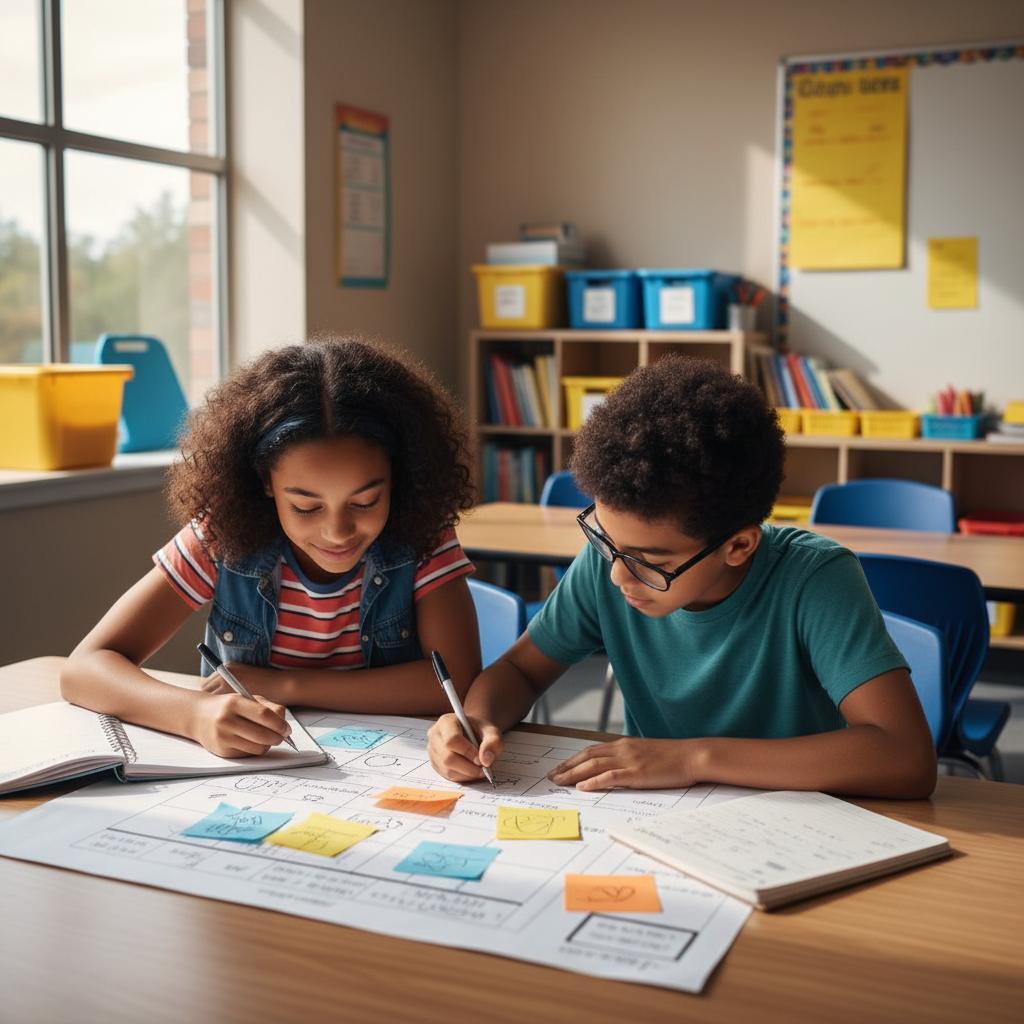




Treat the first month as a period of adjustment
Ninth grade can bring new buildings, schedules, expectations, classmates, and ways of asking for help—all at once. A student who seems confident one day may feel uncertain the next. That does not automatically mean something is wrong; it may mean they are still learning how this new environment works. Families can offer a steady point of connection without expecting a student to have everything figured out by the end of week one.
Use a brief, predictable check-in rather than an interview after every school day. Try, “What felt easier today?” or “Is there one thing you want help sorting out?” Listen first, then ask whether your student wants ideas, practical help, or simply a chance to talk. Keep the goal modest: understand what is happening and agree on one useful next step.
Before the first day: set up the essentials together
Make a simple home base for school information. Confirm how your student and family can see the schedule, important dates, attendance information, and teacher contact details through the school’s established channels. Check that the student knows where to find the school’s expectations for arriving, changing classes, getting lunch, and handling a missed assignment. If access to a device, internet, transportation, or school materials is a concern, contact the school early and ask what options are available.
Walk through the morning and after-school routine in practical terms. Decide when the student needs to leave, how they will get home, where school materials will live, and when there may be time for food, rest, activities, and homework. Build in a backup plan for a late bus, a misplaced item, or a change in pickup. A plan does not need to be elaborate; it needs to be clear enough that everyone knows what to do.
Week one: make sure the student can navigate and connect
Ask your ninth grader to identify a few useful places and people: the main office, counseling or student-support office, nurse, library, and a trusted adult they can approach with a question. Encourage them to learn how to get from class to class and what to do if they arrive late, feel unwell, or cannot find a room. If the student is unsure, help them rehearse a short question they can use, such as, “Could you show me where I should go?”
Keep conversations specific and neutral. “Who could you ask if you missed the directions?” is more useful than “Why didn’t you know what to do?” Students may need time to learn the school’s routines, and families may need time to learn whom to contact. If the school offers an orientation, student handbook, or family information session, use it as a reference rather than assuming your student will remember every detail at once.
Weeks two and three: check routines before judging results
Look together at the student’s class schedule, assignments, and upcoming deadlines. Ask them to show you the system they use to record work—whether that is a planner, a calendar, or another school-approved approach. The point is not to take over. Help your student choose a routine they can repeat: check assignments at a consistent time, break a larger task into smaller steps, and identify when they might ask a teacher for clarification.
Notice patterns that could call for a conversation. Is the student repeatedly confused about where to submit work, missing materials for a particular class, or unsure how to make up work after an absence? Begin with curiosity: “What part of this process is getting stuck?” Then help them identify a direct next move, such as reviewing directions, speaking with the teacher, or contacting the school office. Avoid assuming a missed assignment reflects a lack of effort; first find out what the student understands and what support is available.
Week four: take stock and agree on one next move
Set aside a calm moment to review the month. Ask what is going better, what still feels hard, and which adult at school has been helpful. Invite your student to name one routine they want to keep and one thing they would like to change. Be specific about what would help: a reminder to check the calendar, a conversation with a teacher, a quieter place to work, or clarification about a school procedure.
If a concern is continuing, contact the appropriate school staff member with your student’s perspective and a clear question. For example: “My student is having trouble understanding how to make up work after being absent. Could you clarify the process?” Whenever possible, include your student in the conversation and let them contribute what they have noticed. Families bring important knowledge of their child; school staff can explain the procedures and supports available in that setting.
A practical first-month family checklist
Use this checklist as a conversation guide, not a scorecard. Adapt it to your student’s needs, family routines, and the information the school provides.
□ Confirm transportation, arrival, dismissal, and a backup plan. □ Locate the student’s schedule and the school’s usual communication channels. □ Identify a trusted adult and the places to go for common needs. □ Agree on a repeatable way to track assignments and deadlines. □ Set a realistic time to check in without turning every evening into a progress report. □ Ask what the student wants you to do when they share a problem: listen, help plan, or contact someone together. □ Review how to ask a teacher or school staff member a clear question. □ At the end of the month, name one success, one unresolved question, and one next step.
If any item is not yet in place, choose a manageable action and decide who will take it. The student might ask a teacher about a confusing routine; a caregiver might check the school’s communication instructions; or both might contact a support person together. Small, shared actions can make school feel more navigable without implying that the student or family has failed.
Connect family actions to the bigger transition plan
The first month is one part of a longer move from eighth grade into high school. The broader 8th Grade to 9th Grade Transition Planning & High School Readiness process can help families and schools coordinate expectations, relationships, and support before challenges become harder to untangle. A useful transition plan leaves room for the student’s voice, recognizes what is already working, and makes it clear whom to contact when circumstances change.
For families, the most valuable contribution is often consistent partnership: share relevant concerns, ask clear questions, and keep the student involved in decisions that affect them. For students, readiness is not having every answer on day one; it is gradually learning how to find information, build routines, connect with trusted adults, and seek help. With time and respectful communication, the first month can become a foundation for the rest of ninth grade.
Explore the related guide: Read the topic pillar
See the idea in motion.
Explore the ONWARDology interactive preview, built around a K–8 growth journey using illustrative student profiles.
Open the preview